



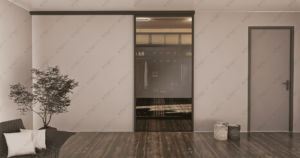
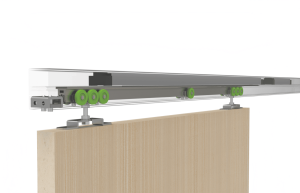
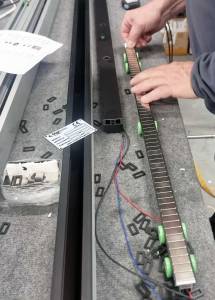
Description
EASY 150: Functions & Features
Options & features of Easy 150 magnetic sliding motorized door systems
- Compatibility with all opening/closing devices including: Radar, sensors, buttons, numeric keypads, fingerprint readers, rfid readers
- Compatibility with automation & home automation devices including: Alexa, Google Home, Shelly, Sonoff, etc.
- Possibility to integrate an electro-lock with an external key that allows the management of lock locking/opening even remotely
- Privacy Function: Enable/disable electro-lock through numeric keypads, rfid readers, fingerprints and lock buttons
- Continuity of service: possibility of integrating a pair of buffer batteries that maintain operation during power failure
- Quick and complete management of parameters with our Android App: opening/closing speed, obstacle sensitivity, duration time during opening…
- Manual opening in case of power failure
- Noise < 50 dB
- Capacity up to 150 kg
Sliding door mechanism for single door panel max 75kg
| Model | Door panel Width (L) | Length of the rail (Lx2) |
|---|---|---|
| EASY 75/80 | 80 cm | 160 cm |
| EASY 75/90 | 90 cm | 180 cm |
| EASY 75/100 | 100 cm | 200 cm |
| EASY 75/110 | 110 cm | 220 cm |
| EASY 75/120 | 120 cm | 240 cm |
| EASY 75/130 | 130 cm | 260 cm |
| EASY 75/140 | 140 cm | 280 cm |
| EASY 75/150 | 150 cm | 300 cm |
- Door panel weight: from 20 to 75 Kg
- Opening speed: from 0.2 to 0.6 m/s
- Closing speed: from 0.2 to 0.6 m/s
- Total stop time: from 0 to 30 seconds
- Temperature: from -40 °C to +60 °C
- Rated power: v 110/240 50/60 Hz 120w
- Manual opening force: less than 10 N
- Standard guide length: 2100 mm (customizable)
Sliding door mechanism for single door panel max 150kg
| Model | Door panel Width (L) | Length of the rail (Lx2) |
|---|---|---|
| EASY 150/80 | 80 cm | 160 cm |
| EASY 150/90 | 90 cm | 180 cm |
| EASY 150/100 | 100 cm | 200 cm |
| EASY 150/110 | 110 cm | 220 cm |
| EASY 150/120 | 120 cm | 240 cm |
| EASY 150/130 | 130 cm | 260 cm |
| EASY 150/140 | 140 cm | 280 cm |
| EASY 150/150 | 150 cm | 300 cm |
- Door panel weight: from 75 to 150 Kg
- Opening speed: from 0.2 to 0.6 m/s
- Closing speed: from 0.2 to 0.6 m/s
- Total stop time: from 0 to 30 seconds
- Temperature: from -40 °C to +60 °C
- Rated power: v 110/240 50/60 Hz 120w
- Manual opening force: less than 10 N
- Standard guide length: 2100 mm (customizable)
OPERATING ACCESSORIES
To ensure the proper functioning, safety, and efficiency of automatic doors, it is essential to equip them with the right accessories. Radar, sensors, buttons, and other additional components are designed to enhance system interaction, reliability, and responsiveness. Each accessory is designed to optimize the user experience, address specific needs, and ensure high performance in all situations.
Radar DG 420
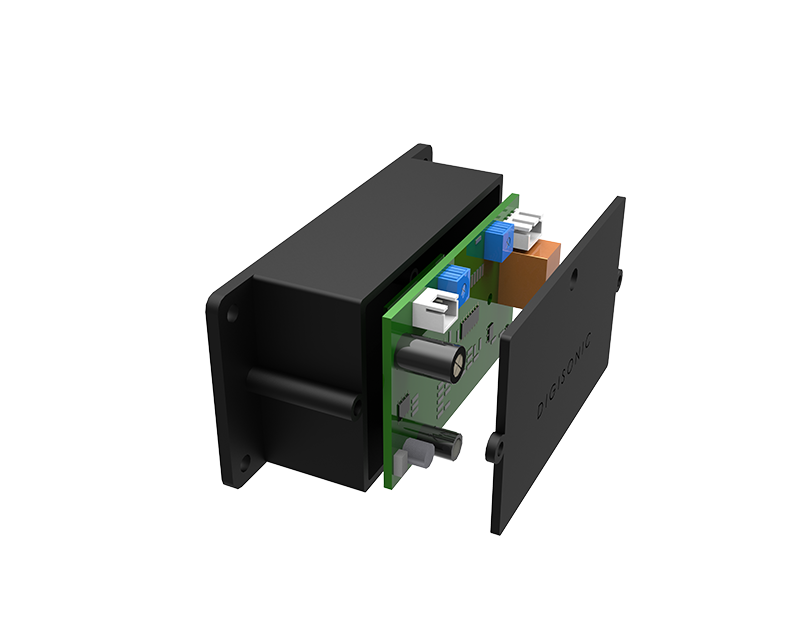
The EASY system opens and closes automatically using a DG420 presence radar sensor, which is installed behind a panel or wall-mounted module using fastening screws. This way, the sensor remains externally invisible while still detecting the movement of an approaching person, triggering the door’s opening. The detection range is adjustable from 200 to 10,000 mm.
Operating Principle
Microwave technology, sometimes referred to as radar technology, is based on the Doppler effect. Radar sensors continuously emit microwaves of a specific frequency within the detection area. These waves are reflected by objects in the area and return to the sensor. If the object is stationary, the frequency of the reflected wave remains unchanged compared to the emitted one, and the sensor detects no movement. However, when movement occurs within the detection field, the frequency of the reflected microwaves changes, triggering the sensor’s detection mechanism. This technology also allows the sensor to distinguish between approaching movements (which cause an increase in frequency) and receding movements (which result in a decrease in frequency), enabling the sensor to open the automatic door exclusively in the direction of approach.
Advantages
The DG 420 embedded microwave radar provides precise motion detection, even at long distances, and is ideal for environments where aesthetics are important, thanks to its ability to be installed behind a panel. It ensures reliable performance without interference from external factors.
Easy and Integrated Installation
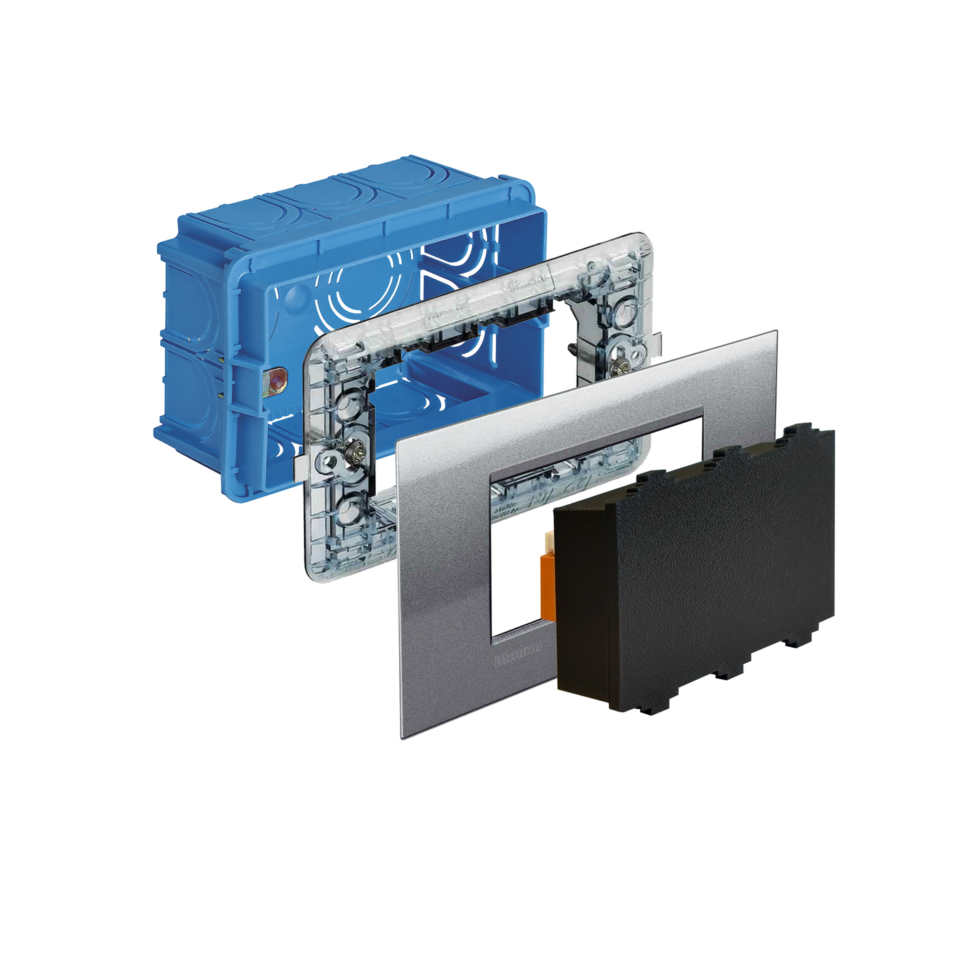
In addition to the traditional installation behind a panel, the DG420 radar sensor can also be easily installed as a touch sensor directly on the wall, compatible with 503 junction boxes and the main industry brands. This allows for a simple and quick installation, without the need for complex masonry work. The sensor is adjustable, with a detection range that can be set from 20 cm and extended as needed, to suit the specific requirements of any environment.
Attractive and Customizable Design
The sensor can be completed with a decorative frame plate, making it aesthetically appealing and seamlessly integrating with home interiors. Additionally, to help identify its location, an indicative sticker can be applied, clearly signaling the sensor’s presence while maintaining the overall aesthetic of the space. Thanks to this option, the radar sensor is not only functional but also becomes an integrated design element.
SF-22 Touch sensor
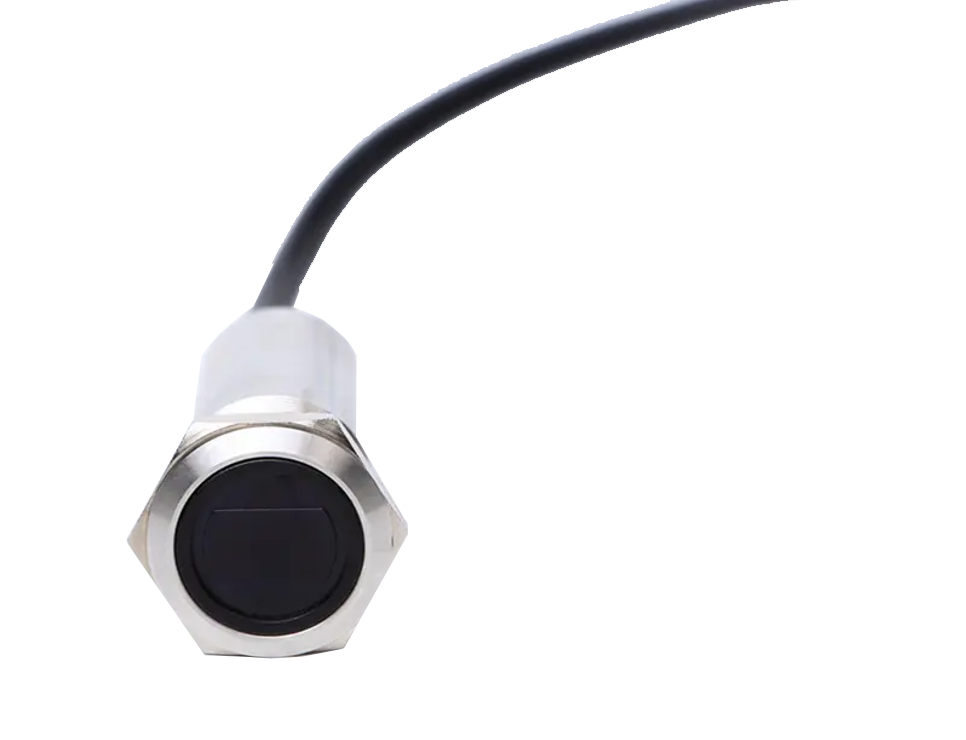
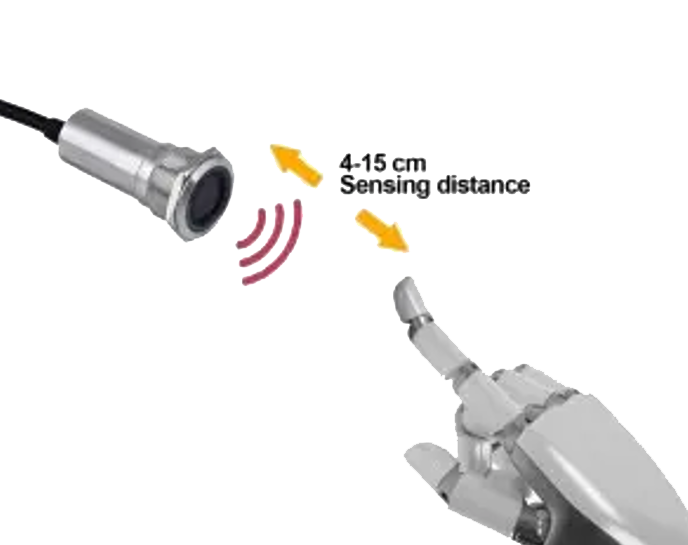
Touch sensors represent an advanced technology for controlling automatic sliding doors, offering a practical and elegant alternative to traditional activation systems. These sensors (22 mm diameter) are designed to detect the proximity of an object—usually a person’s hand or foot—without the need for direct contact. When the sensor detects movement or a simple touch on its surface, it triggers the door’s opening mechanism, allowing smooth and immediate passage.
Operating Principle
The technology behind these sensors can vary, with the most common types being capacitive and infrared. Capacitive sensors detect changes in the electric field caused by the presence of a human body, while infrared sensors use invisible waves to detect movement. In both cases, the response is immediate: simply bringing a hand or body close to the sensor within a minimal distance is enough to activate the door opening.
Advantages
One of the main benefits of this technology is improved hygiene and convenience. Thanks to wall mounting, operating the door is simple and intuitive. A light touch or wave of the hand in front of the sensor sends a signal to open the door, eliminating the need to touch handles or buttons and reducing the risk of contamination—an important factor in high-traffic or public environments such as hospitals, offices, shopping centers, and stations.
The ability to open doors automatically without contact makes them ideal for areas with continuous foot traffic where minimizing physical contact is essential. Additionally, touch sensors offer an elegant and aesthetically pleasing solution. Installation is simple and can be done on walls or columns, with a minimalist design that fits both modern and traditional spaces.
The sensors’ precise and reliable operation also minimizes the risk of accidental or unintended openings, ensuring smooth and silent door movement. This enhances the user experience and optimizes energy efficiency, as the door only opens when strictly necessary.
PS Series buttons
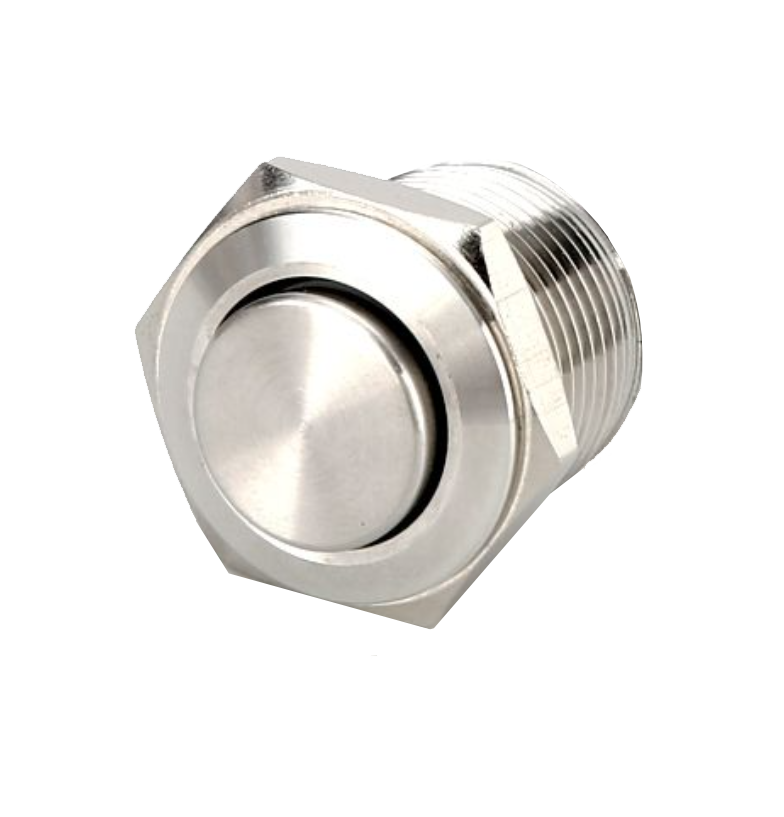
The PS buttons feature a modern and minimalist design, with a diameter of only 16 mm, making them ideal for environments that require a clean and essential aesthetic. The smooth stainless steel surface provides high durability and an elegant appearance, seamlessly integrating with various architectural and interior design contexts.
Operating Principle
Sliding door control buttons function as electrical switches, designed to detect user contact on the button surface. When pressed, the button closes (or opens) the electrical circuit, sending a signal to the automation system to activate the door opening.
This technology stands out for its simplicity, reliability, and robustness, ensuring consistent operation over time. The buttons/switches provide a practical and effective solution for applications where immediate and intuitive activation of the opening system is required.
Advantages
Thanks to their high-quality construction and electrical contact technology, the buttons/switches provide a fast and reliable response when activated, even under demanding conditions. They are suitable for use in public, commercial, or industrial environments, where consistent and safe operation over time is required.
Keypad fingerprint
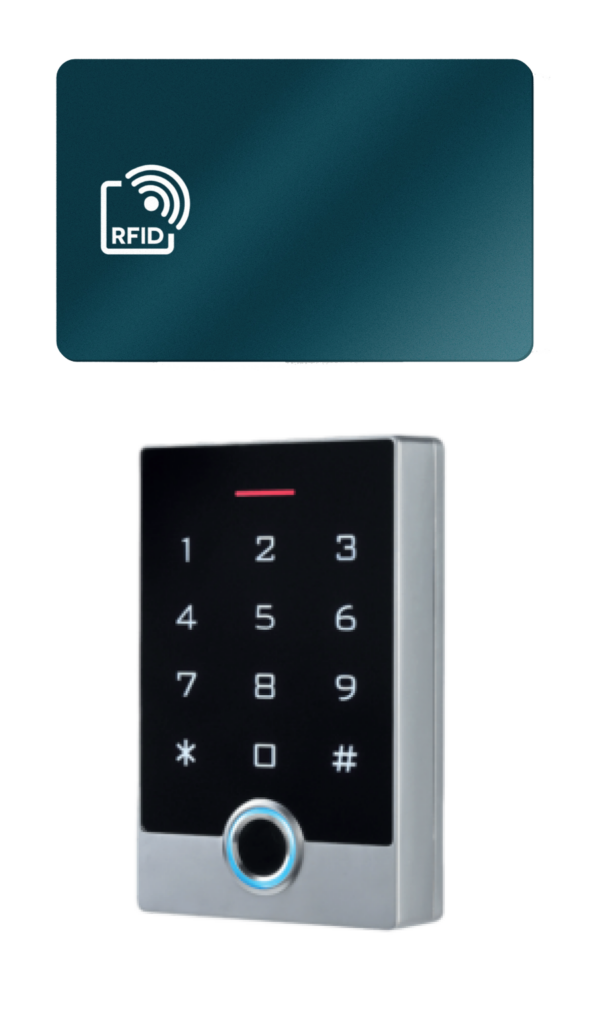
The digital keypad with PIN, RFID card reading, and fingerprint recognition represents an advanced access control solution, designed to be paired with an electric lock or electric strike. By combining multiple authentication methods, it provides a high level of security. This system is particularly suitable for environments that require fast and secure access, offering flexibility and protection against unauthorized entry. It is important to note that if the correct PIN is not entered, or if the fingerprint or card is not recognized, the door will not open, ensuring maximum security against unauthorized access attempts.
Operating Principle
The digital keypad allows authentication via PIN, RFID card, or fingerprint. Users can gain access by entering a numeric code, presenting a card to the reader, or using their fingerprint. The three access modes can be used individually or in combination, providing a highly secure and versatile system.
Advantages
By offering access via PIN, RFID card, and fingerprint, this keypad provides advanced protection. The RFID technology allows for fast, contactless access, while the fingerprint ensures higher security, reducing the risk of unauthorized entry. The PIN adds an additional layer of protection.
This solution is ideal for hotels, offices, gyms, public buildings, and other locations that require the use of numeric codes or RFID cards for access. Easy to install and integrate with existing access control systems, it provides a simple and effective way to manage security while improving operational efficiency.
Minicell 224
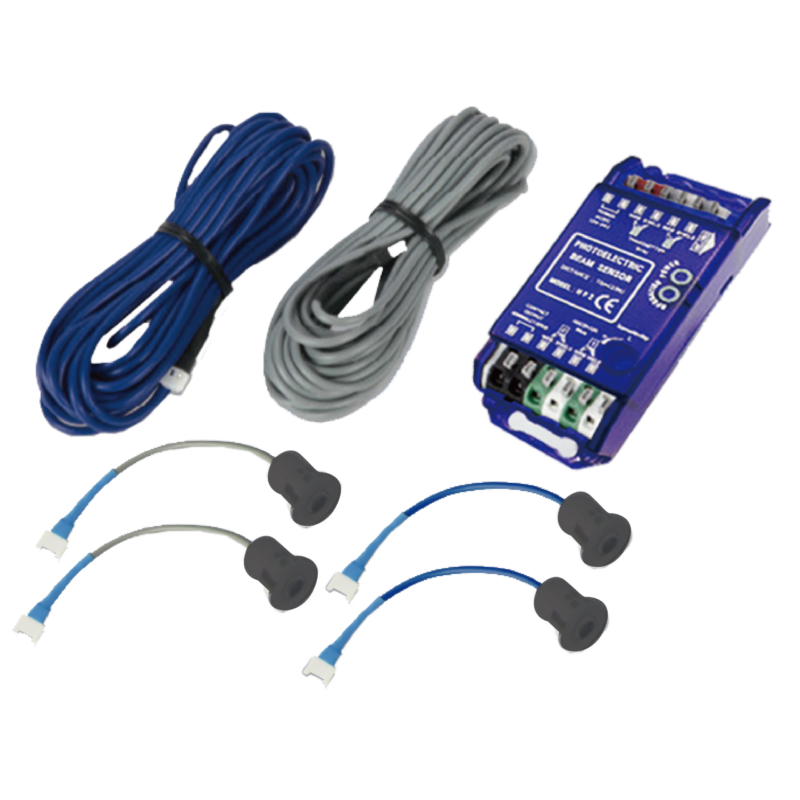
Safety photocells are essential safety devices for automatic sliding doors, used to prevent accidents and ensure user protection. These sensors, based on infrared technology, create an invisible monitoring system in front of the door. The photocells emit a beam of infrared rays that cross the area near the door, forming an invisible “safety zone.”
Operating Principle
The operating principle of the photocells is simple and highly effective. When a person, animal, or any other object enters the detection field, it interrupts the flow of infrared rays between the photocell transmitter and receiver. This interruption is immediately detected by the control system, which responds by stopping the door movement or reopening it, thereby preventing damage or injury.
Advantages
In environments where automatic doors are in constant use and the risk of accidents is high, photocells provide an additional layer of protection, preventing the door from closing while a person is in its path or from damaging an object. The EASY sliding system is also equipped with an anti-crush mechanism, so if the door encounters an obstacle and detects resistance, it will automatically reopen.
For complete safety, especially for elderly people, children, and pets, it is recommended to use a pair of safety photocells. In addition to protecting users, these photocells also help improve the efficiency of the automatic door system. For example, if a person approaches too slowly or pauses in front of the door, the sensor interrupts the door’s closing, preventing it from closing accidentally while someone is still within the detection area.
Electrolock
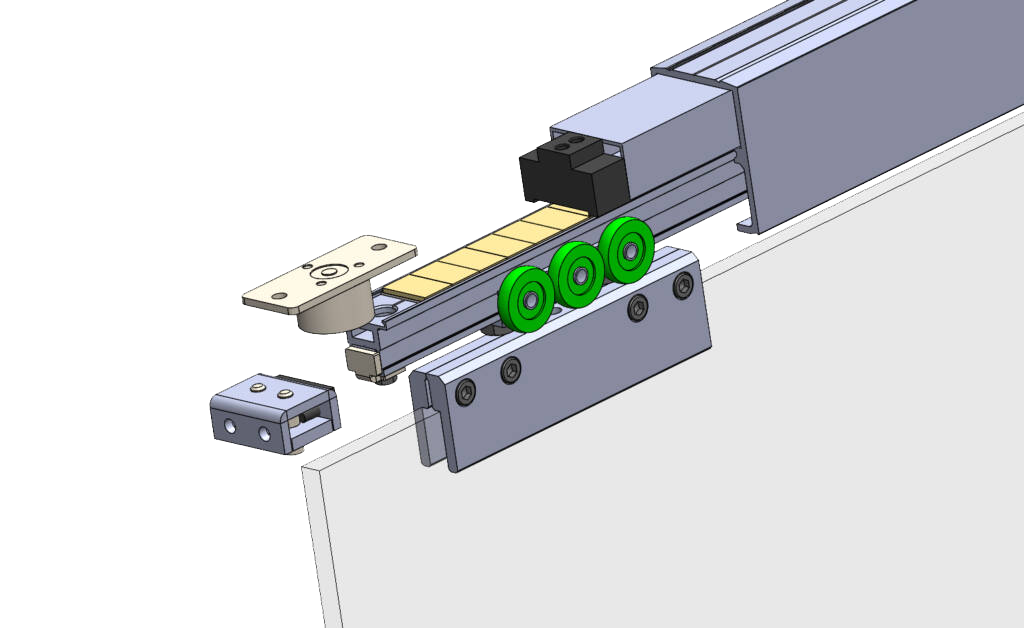
The main function of an electric strike lock is to secure the door, simulating a traditional keyed lock but with the difference that the operation is fully automatic and without any visible components. With extremely compact dimensions, the electric strike lock is installed inside the guide profile and positioned at the end. Once activated, the electric strike engages a pin that contacts the sliding carriage, locking it in all directions.
Operating Principle
The operation of the electric strike lock is based on a passive safety principle. The lock remains engaged when the door is in the closed position, keeping the opening mechanism in a “secure” state until it receives an authorized opening command, which can come from a sensor, a button, or another electronic control system. In this way, the electric strike lock prevents unauthorized access and reduces the risk of accidental openings, which could cause damage to people or objects.
Sinox electrolock
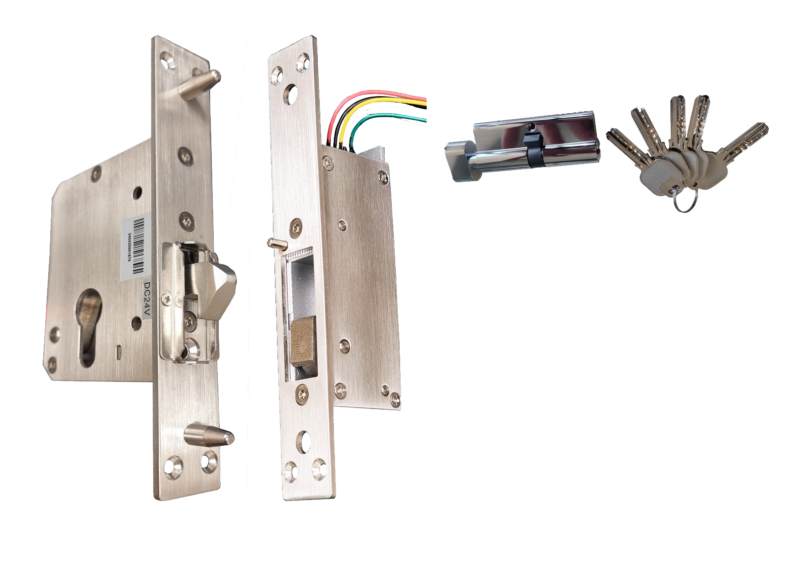
The stainless steel electric lock for automatic sliding doors is a safety device designed to ensure proper operation and protection of sliding doors in commercial, industrial, and residential environments. Made of stainless steel, a corrosion-resistant and durable material, this lock is designed to integrate into automatic door systems, allowing doors to open and close safely and under controlled conditions.
Operating Principle
The electric lock is activated via remote control, card reader, or centralized system. When the activation signal is received, the lock disengages automatically, allowing the sliding door to open. Similarly, when the door needs to be closed, the lock engages again to secure it. This system ensures safety by preventing unauthorized openings and maintaining the correct door alignment.
For manual operation, the lock can be operated using a proprietary key. Once the lock is disengaged with the key, a light push is required to open the door. This mechanism ensures that the door opens only after unlocking and pushing, preventing accidental openings.
Advantages
The electric lock offers high security by combining electronic control with manual key operation, preventing unauthorized access. Made of stainless steel, it is corrosion-resistant and ensures long-lasting durability, suitable for both indoor and outdoor environments. The automatic system allows for quick and convenient door operation, while the key provides a secure alternative. Thanks to the quality of its materials, the device is reliable over time and easily integrates with existing access control systems.
FAQ
What is the maximum width of the door panel that can be used with the EASY 75/150 sliding door track?
The maximum width of the door panel that can be used with the EASY 75/150 sliding door track is 150 cm.
What is the length of the sliding door track?
- The length of the sliding door track is equal to the width of the door panel (L) x 2
What is the maximum weight capacity for the door panel with the single-door panel mechanism?
- The maximum weight capacity for the door leaf with the single-leaf mechanism is 75 kg for EASY 75/150 and 150 kg for the EASY 150 model.
What are the installation options for the sliding door track?
- The sliding door track can be installed either recessed or on the wall with the provided support brackets.

Reviews
There are no reviews yet.